Our phone lines are open: Monday - Friday from 7 AM to 10 PM, and Saturday from 8 AM to 8 PM
We are now offering evening hours on Tuesdays to better fit your schedule - book your appointment today!
Our phone lines are open: Monday - Friday from 7 AM to 10 PM, and Saturday from 8 AM to 8 PM
We are now offering evening hours on Tuesdays to better fit your schedule - book your appointment today!


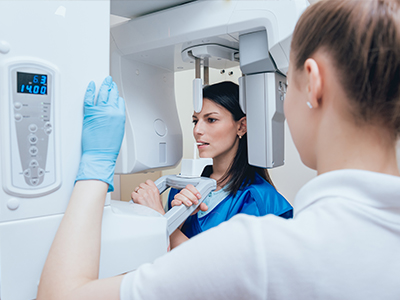
Digital radiography utilizes computer technology and digital sensors for the acquisition, viewing, storage, and sharing of radiographic images. It offers several advantages over the older traditional film based methods of taking x-rays. The most significant of these advantages is that digital radiography reduces a patient’s exposure to radiation. Other benefits are that images can be viewed instantly after being taken, can be seen simultaneously as needed by multiple practitioners, and can be easily shared with other offices. Digital x-rays are also safer for the environment as they do not require any chemicals or paper to develop.
An electronic pad, known as a sensor is used instead of film to acquire a digital image. After the image is taken, it goes directly into the patient’s file on the computer. Once it is stored on the computer, it can be easily viewed on a screen, shared, or printed out.


Start Your Journey to a Healthier Smile Today
Contact us today to request an appointment and discover the difference our compassionate, skilled care can make in your smile.